

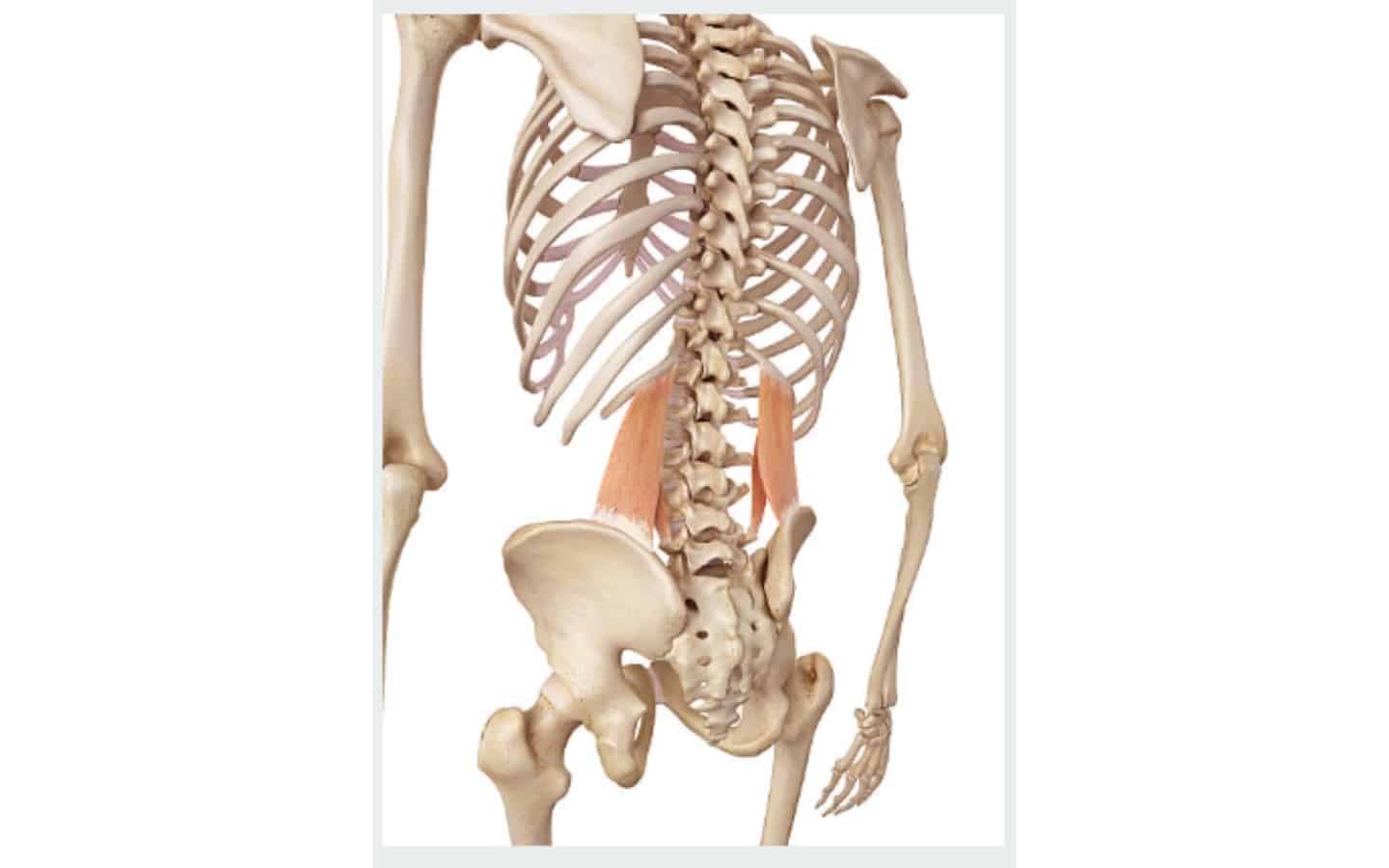
Anatomy Corner: QL Muscle
If you’ve never thought about your quadratus lumborum muscle, you’re not alone. However, this muscle’s length, tension, and activation can significantly impact your mobility and strength.
First, to locate your quadratus lumborum muscle in context: everyone talks about “strengthening the core,” so let’s discuss the muscles that make up the core.
The core muscles can be divided into two categories:
- Deep stabilizing muscles: the pelvic floor, the transversus abdominis, the internal oblique muscles, the multifidi, and the diaphragm.
- Superficial global muscles that assist with movement of the torso and extremities: the rectus abdominis, external obliques, erector spinae, gluteal muscles, iliopsoas, and the often-overlooked quadratus lumborum (QL).
The QL runs just beside the posterior spine, acting as an antagonist to the anterior abdominal muscles. You have two QL muscles—one on each side of the spine. Each attaches at the bottom of your 12th (lowest) rib and spans the space from the back of the rib cage to the pelvis, with lower attachments on the lumbar spine and the iliac crest at the back of the pelvis (see image above).
The primary functions of the quadratus lumborum are lateral trunk flexion (side-bending) and unilateral hip hiking. The QL can also assist with lumbar spine extension.
The QL can easily become counterproductively tense and contribute to lingering back or hip tension. However, strengthening the QL in conjunction with the rest of the core can help rebalance its activity, improve spinal stability, and reduce the risk of back injury.
Below are some exercises which involve the QL:
Not sure where to start? Especially if you’re currently experiencing back or hip pain, see your PT to develop a strengthening program tailored specifically to you!
By Aubin Sullivan