

Anatomy Corner: Shin Splints
With the marathon quickly approaching, some of you runners—or walkers—may have experienced pain in the anterior shin or along the medial (inner) side of the lower leg without knowing what was causing it.
Two common overuse injuries, especially among runners, are anterior and posterior tibialis tendinopathy, both of which are sometimes referred to as “shin splints.”
So, let’s break down what these muscles do and why they can be the source of common running injuries.
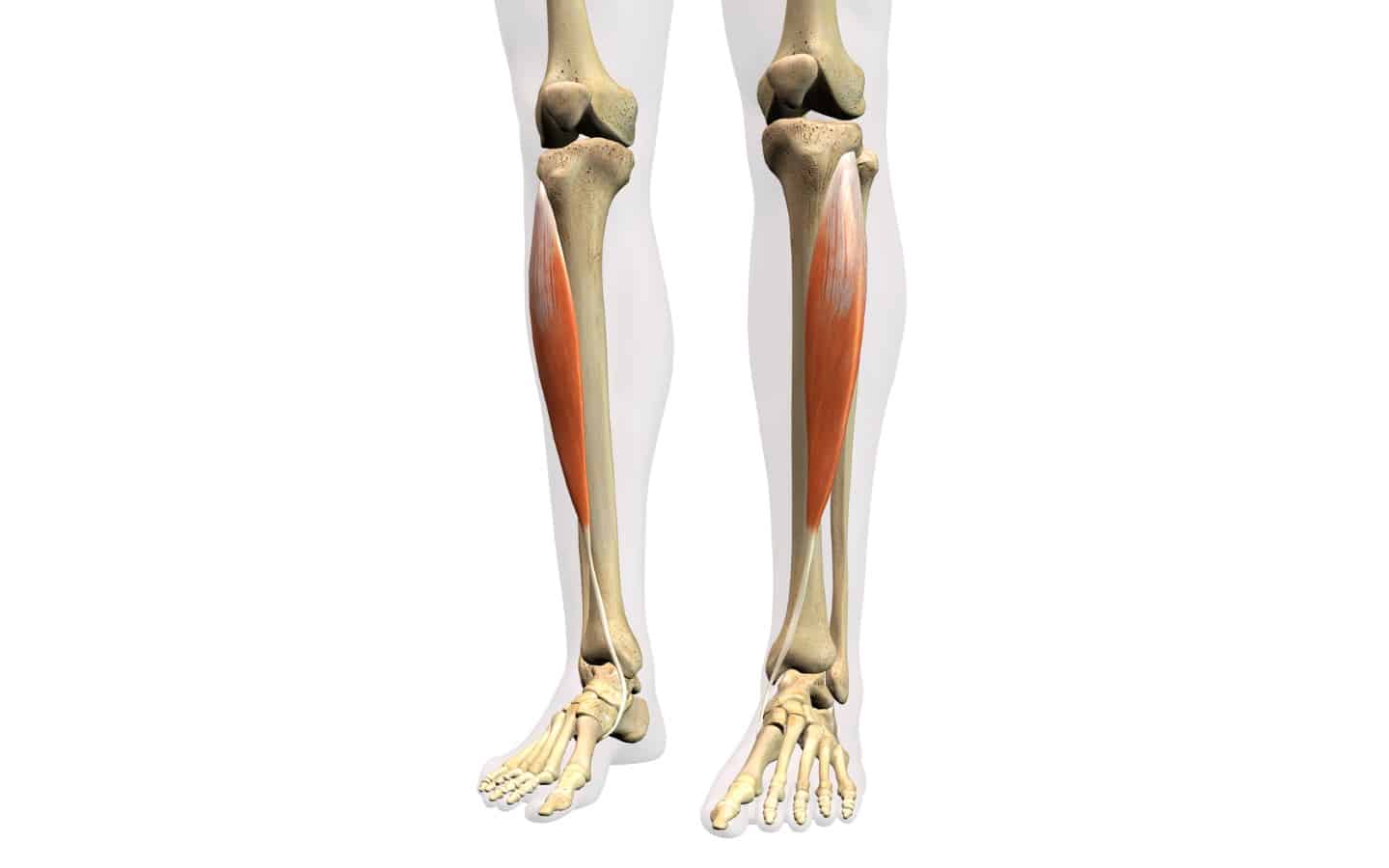
Anterior tibialis, or tibialis anterior (pictured above), is a lower-leg muscle that lies along the anterior/lateral tibia (hence, tibialis).
The muscle originates on the lateral shaft and condyle at the top of the tibia, just under the front of the knee. Lower down, as the muscle becomes a tendon, it wraps around the inside edge of the foot and inserts at the base of the medial cuneiform and the base of the 1st metatarsal, close to the arch of the foot.
Its actions are ankle dorsiflexion (pulling the foot upward) and ankle inversion (inward rotation of the foot).
One of the main jobs of this muscle is to control the lowering of the ball of the foot after the initial heel strike during walking, helping to avoid a “foot slap.” The same action occurs during running.
Common injuries involving the anterior tibialis include:
- Anterior tibialis tendinitis: irritation or inflammation of the tendon of the anterior tibialis muscle (the portion that attaches the muscle to the bone), usually occurring in the anterior ankle near the insertion point.
- Shin splints: pain in the muscle belly of the anterior tibialis due to overuse of the muscle.
- Foot drop: loss of the ability to actively dorsiflex the ankle due to nerve impingement or nerve dysfunction. The anterior tibialis is innervated by the deep fibular nerve, a branch of the peroneal nerve.
- Anterior compartment syndrome: pressure buildup in the muscle tissue caused by impaired blood flow, usually associated with serious trauma. This is a medical emergency and should be addressed immediately.
Posterior tibialis, or tibialis posterior (pictured below), is a long muscle that runs along the inside edge of the lower leg, wraps behind the medial malleolus (ankle bone), and attaches to several areas of the medial foot beneath the arch.
The muscle originates from the posterior proximal tibia and fibula, as well as the strong interosseous membrane between them.
The tendon inserts along the medial foot, attaching to the navicular, cuneiform, and metatarsal bones along the bottom of the foot.
The actions are ankle plantar flexion (pointing the foot/ankle) and ankle inversion (rotating the forefoot medially).
Because of how the tendon inserts onto the small bones on the bottom of the foot, the posterior tibialis is an important stabilizer of the arch of the foot.
The most common injuries involving the posterior tibialis muscle are related to repetitive stress:
- Posterior tibialis tendinitis: usually an overuse injury causing inflammation in or around the tendon. It may also be referred to as medial tibial stress syndrome, or shin splints.
- Posterior tibialis tendinosis: untreated tendinitis may lead to degeneration of the tendon fibers, which can weaken the tendon.
- Posterior tibialis dysfunction: the distal tendon that runs along the medial/bottom of the foot can stretch out over time due to poor biomechanics, poor ankle stability, or untreated posterior tibialis tendinosis.
- Rupture of the posterior tibialis tendon: a partial or complete tear of the tendon due to chronic overstretching and/or repetitive stress from high-impact loading.
Rehabilitation for overuse injuries like shin splints involves strategic loading and stretching of the tendons, but it should be tailored to the severity and location of the injury.
If you have been experiencing shin or ankle pain, especially if your exercise routine has changed recently, see a physical therapist as soon as you can so they can assess the problem and formulate a treatment plan. Injuries to these muscles and tendons are treatable when addressed promptly, so you can get back out there and run again!
By Aubin Sullivan